A Long Preface
Whenever I go to Japan, I'm more than happy to stay in the same parts of Yokohama during my entire stay. My grandmother and I can talk for days; I can see my cousins at their building whenever; I can meet with Naomi at Sakuragicho after she gets off of work and we can loaf around Isezakicho until the last subway train. Mordecai is not like this, not because he does not get along with these people but because he gets anxious to see new things. In the past, we've traveled in the general area to Atami, Kamakura/Enoshima, his host family's part of Tokyo, and we've both independently been to Hakone, Mt. Fuji, as well as Osaka and Kyoto. For this year's trip, Mordecai suggested that we travel to a completely different region. By a combination of process of elimination and an interest in The Natures, he ended up suggesting a trip to
Yakushima. It's a small island off of southern Japan, a part of the Kagoshima prefecture of the island of Kyushu. Yakushima is probably best known for its ancient cedar forest, which served as inspiration for the holy forest in "Princess Mononoke." At first, I was kind of iffy about the trip, mostly out of ignorance. The description "UNESCO World Heritage Site" had, and to some extent still has, little effect on me; that is likely just some unpleasant form of American in me. But my cousins were also on board, and so once I got to Japan, my cousin Mai and I went to a travel agency to see how this trip would work out logistically and financially. It turns out that one must first fly to Kagoshima, then take either a 30 minute plane ride or a 2 hour ferry ride to Yakushima. It also turned out to cost a leg and an arm to embark on this trip, even in a packaged deal. Which is another way of saying, it was cheaper to go to Guam or South Korea than it was to travel within Japan. But I think the price tag is like that for a reason--you can't really "casually" go to Yakushima. You have to be invested in it in many ways. But I'll say it again: I'd go again, even with an unfavorable exchange rate.
Our schedule went like this: leave Tokyo on Thursday, hike in Yakushima on Friday, return to Tokyo on Saturday. Mordecai's main interest was the ancient cedar forest, the highlight of which is the Jomonsugi tree. It's supposed to be anywhere between 2000 and 7000 years old. They say: We don't know for sure because it would have to be cut down to have its trunk properly analyzed. I say: It is not our place to know its precise age, and that's not what is important. Or, I say: A real lady never reveals her age. Anyway, the hike/climb to see the Jomonsugi takes TEN HOURS, round-trip. So basically, we were going to Yakushima to sacrifice a lot of money and energy to pay our respects to a really old tree.
The Wednesday before our trip was the day that Mordo and I went to the Fujiko F. Fujio Museum. After leaving the museum, I realized that I wasn't feeling well--possible stomach issues, possibly aching all over, and possibly a little warm. This was alarming, and I tried to do my best to be really still and to eat simple foods. This was challenging because before returning home, we stopped at a
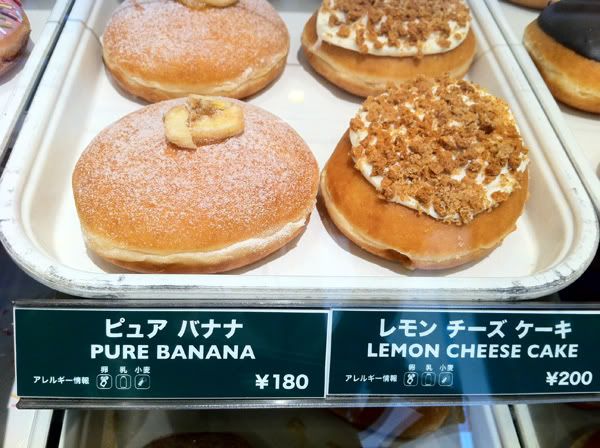
Krispy Kreme (
"Pure Banana" and Lemon Cheesecake are the best), and
Denny's was the plan for dinner. Both of these institutions are finer in Japan than in the U.S. Plus, I had to hide my illness from my grandmother, as I didn't want to worry her. I could not find a thermometer in her apartment without asking so I never knew my temperature, but I took a slightly too hot shower for slightly too long and ended up feeling like my body was on fire. After not sleeping well or eating that night, I woke up still feeling pretty bad, and almost gave up, telling Mordecai I didn't think I could go. But after saying that out loud, some switch went off in my head, and I said to myself, I'M GOING TO YAKUSHIMA. So I took back my words and told Mordecai, "Nevermind. I'm going!" I thought I could at least opt out of the hike if I had to. I took some Advil and got as much of my stuff together and off we went to Haneda Airport. I was kind of hanging by threads, waiting for Advil to kick in, and Mordo didn't seem to be doing all that much better either. He was physically fine but probably worried that I was going to die trying to get to Yakushima, which is funny because although I was not well, it's not like I was on my deathbed, either. On the way to the airport, he dropped his wallet in the back of a taxi that left us for another appointment via a highway; this isn't so much a problem for identification as it was for the fact that
cash is king in Japan and every yen was essential. Miracles happen though, as the driver had given me a receipt and I was able to immediately track him down. We also jointly forgot our best cameras (DSLR, zoom lens for it, Canon G9) and were left with the compact Sony camera and my iPhone (4).
On the way to Yakushima, I never really felt okay and I just kept worrying about whether I was going to be able to hike or not. What was annoying was that I felt somewhere in between barely being able to and not being able to hike at all, but I had no idea which way I would go. The illness was half-assed in this sense; it would've been easier if I had just a little cold or if I was straight up violently ill. But the closer I got to Yakushima, a combination of not getting worse and increasing determination led me to believe that barring some bad turn of events, I would go on the hike.
What's odd is that the first time I felt really fine was on the ten hour hike to Jomonsugi. It's like my body knew an epic trail was starting, and it whipped itself into shape. I survived it all on rice, rice crackers,
biscuits for small children, and water. Once I got going on the trail, I was fine, and I was purely focused on the hike. Everyone in Japan calls Jomonsugi a "power spot," as though nature gives off a quasi-mystical and positive effect on people. Some of it is obviously psychological or even superstitious but I definitely felt like I had received some kind of will and energy, which did not originate entirely from within me, to move on and feel better in that humid yet lush environment. It also helps that my cousins are hilarious, especially Mitsutaka. Laughter really helps to heal. The hike itself was the point at which I began a slow but sure start to the recovery of my health. I was able to eat more on Saturday, enjoying the regional foods and desserts, and I was feeling much better on Sunday and on the flight home to Chicago on Monday.
The rest of the story here is filled in with photos. The Sony was totally sufficient, and the iPhone is never bad to have on hand. And in retrospect, though I saw hikers with DLSRs and Canon G9s (or G11s now), I would not recommend bringing a DSLR or even a heavy compact camera to this hike. Your focus is the hike and your guide, and while walking, you rarely have time to even look up, let alone stop and take a still photo! Anyway, here's our trip, including our brief stops in Kagoshima.
The Trip
We flew to Kagoshima from Tokyo, which takes about two hours. I've never flown domestically in recent memory, so I was amazed at how easy it was. No one ever checked my identification to see if I at least claimed to be the person whose name was on the ticket. We didn't even check ourselves in because my cousins did it for us. And Mordo's a foreigner! He had a bottle of water and a pair of scissors in his carry-on, and the security attendant politely asked to observe these items. She smelled the bottle's contents, measured the scissors, asked him not to take it out during the flight, and thanked him for his cooperation. She used honorofic forms for every question and comment. The End. Wow.
When we got to Kagoshima's airport, we had to take a bus to get to the city itself. When we arrived, this was the main street. I guess they don't have a train system like other major cities in Japan? And have a grassy trammy system? The bus looks like it's going to get on the tram rails but that's just a normal bus.

Then we looked around what is reportedly the most bustling part of Kagoshima.

I know this makes me seem like an immature city girl, but...this looks like a ghost town stuck in the 1990's, if that.
Kagoshima is known for their pork products (they are called "black pigs," which seem to be of the Berkshire variety), so we were in search for tonkotsu (pig bone broth) ramen. There was no way I was going to venture into a giant bowl of pig grease and noodles so while everyone had delicious ramen, I had rice and seaweed. Mordecai says that the ramen had a bacon flavor that he hadn't had before in tonkotsu ramen.

Before boarding our ferry to Yakushima, we had a nice view of Sakurajima, a little volcano that somehow sublty spews black ash on the surrounding area. I rarely see dirty cars in Japan, but I saw a few in Kagoshima and I guess it's because of the ash flying around everywhere. Our ferry, Toppy, took us to Yakushima in a couple of hours. It was a smooth ride; I got sea legs on the Sea Bass but had no problems with Toppy. We arrived at the Miyanoura port and took a public bus to the Yakushima Green Spa Hotel. Though the hotel is closer to the other port, Anbo, it was interesting to take the bus along the eastern edge of the island. I saw young students in uniforms and wondered what their lives were like on this tiny island. I asked someone at the hotel if there were any fast food restaurants, and she said there's a Mos Burger, but nothing else. Everything else is local, which I guess is just family-owned. Do the kids go to Kagoshima for fun? A 2 hour ferry ride must be a big deal. Kagoshima was uncrowded, but the true ghost town was Yakushima. It was raining a little, but still, there was little evidence of people!

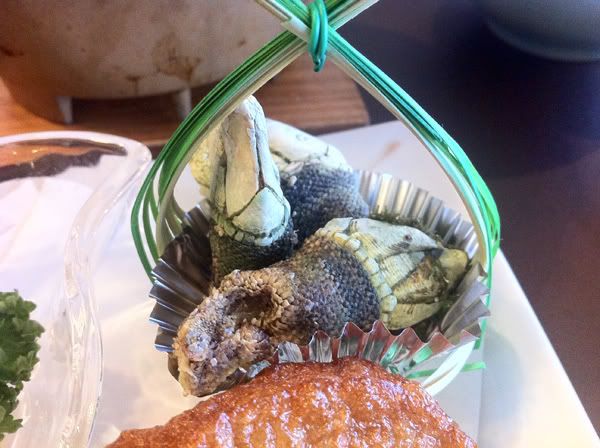
Though there were moths to greet us in our room, I liked our hotel. The highlight may have been the food, which I was able to nibble on here and there. There was of course lots of seafood, and they were into their little shabu-shabu pots that steam vegetables and thin strips of beef. The star of this meal above was the "
turtle's feet." Before our server explained what everything was, I thought, Hmm, these things here look like turtle's feet, gross. Then he pointed to them and said, "These are turtle's feet." But then he went on to explain that they are actually a variety of clam. Weird! But they were fun to open (like a nutshell?) and they were tasty.

Early next morning at the hotel, we picked up our breakfast and lunch bento boxes at the front desk, and we met our tour guide, Maeda-san. He drove us to pick up the last member of our hiking group, a middle-aged woman from Hokkaido (!) whose name we never learned. Mitsutaka declared her to be "Nishida," which I think is based off of no real information, but that is who she is to me now. Then we drove to the bus that would take us on a 35-minute trip up and into the island to the entrance of the Jomonsugi trail. The trail is so protected--only designated buses and taxis can go up to the trail entrance, so I imagine that it's easy to keep track of who goes in and out of the trail.

This is what happens when you try to take a picture while hiking. The first part of the trail is along these railroad tracks that were once used to transport cedar logs out of the forest. After about 2 or 2.5 hours, you begin a mountain climb up to the tree. You walk in a single file line, passing down cautions by voice to the person behind you. It was hard to stop and admire the landscapes, but Mordo did at one point to take this shot. A lot of the views of the mountains surrounded by clouds really reminded me of the opening scene of "Princess Mononoke."
There were a few bridges to cross, at least two of which did not have rails.
There are many other famous cedar trees along the way to see Jomonsugi. Below is the "Wilson Stump." I guess the older trees can begin their decline with a hollow trunk at the base, and some trees just fall over. The Wilson Stump is known for the view from inside. If you scoot into one edge of the stump inside and you look up, you should see one giant heart and a small one nearby. I had trouble at first and saw only the small one but backed farther into the edge and sunk lower to see the other giant one. Obviously, this is a hot spot for couples. Here we are in front of the stump.
And here are the hearts.
Mordecai shook his head at the hearts and called them a "gimmick"! Poor Wilson. Later on the way back, we stopped back in and found a couple trying to take a picture of themselves with the hearts in the background. I offered to take their picture, and I think they were pleased with the results, if I say so myself.
The railway tracks are mostly a reminder of how the forest was logged until about 1970, which is I'm guessing when environmental issues started becoming more mainstream and the UNESCO stamp was starting to be sought or acquired. It's kind of scary to think that this forest would be logged as much as possible, but perhaps not all that surprising in the pre-modern era. There was even a small town in this forest, complete with a school, that had to be closed around 1970. But the rails also indicate how the two restrooms on the trail are presently maintained. The first restroom is a "bio toilet," and the second restroom has some sort of plumbing system and is at the end of the rail track trail, before the beginning of the climb to the Jomonsugi. Beyond this bathroom, there is only one designated places to use "mobile toilets" that you can bring with you in the case of an emergency. And as with all garbage, you must bring your waste back with you to the trail entrance! I'm happy to report that the only waste I had to deal with was picking up little candy wrappers that other people had dropped. I don't know what a bio toilet is nor do I know how to use a mobile toilet, and I'm glad I didn't have to find out. My first name means "blessed" and I do not think this is a matter of coincidence. Thank you for the name and destiny, Grandfather Hotoda.


The climb up is hard. There aren't many rails, so you use whatever the forest offers you if you need it--rocks, branches, stumps. I remember the cedar branches and stumps I frequently used to hoist myself up stairs or rocks; they were so smooth and cool to the touch. I know how this sounds, but I felt like the forest was helping me climb to see the Jomonsugi. There were animals along the way, who coexist with the hikers pretty peacefully. We saw many white-tailed deer, a monkey, and a toad. The higher we went up, the mistier it got, as it rained lightly on and off. My cousins and other hikers were all decked out in waterproof "rainwear," or rain coats, rain pants, and a waterproof cover for their backpacks. Some people had hiking poles. Everyone Japanese basically looked like they had just come out of a photoshoot for the Yakushima tour guide magazines. I initially thought, Ooh, these people are super excited! and didn't think they needed all that. But it turns out I'm American in this respect--arrogant and unprepared--as my raincoat is apparently not waterproof; cotton leggings are comfortable but not ideal when they get wet; and my backpack was a fashionable backpack, but not one that could withstand 10 hours of off and on rain, even with an umbrella. Mordecai was in a similar situation, though he had a better raincoat. The one area where we did not mess up was with hiking shoes. I splurged and got
these, and they were perfect. Did you know that hiking boots are ugly because they get dirty? I figured it out on this trip. Anyway, if you're going to Yakushima on this trail, don't play around with hiking gear and just get what is recommended.
After 2 or 2.5 hours of climbing, we finally got to the Jomonsugi. Look, a sort-of-smile from Mordo in the picture! That means he's super excited.

No one informed me that there were Death Stairs right up to the tree! I was breathless when I saw the Jomonsugi because I thought I was going to die after walking up those stairs. But I was very happy to see it, too. Unfortunately, there are no variations of the picture of us in front of the tree where Mitsutaka's face is not covered by his sister's peace sign hand. And I don't know what's floating out of my pocket. Lol.
Lots of hikers linger here for about ten minutes taking pictures. I saw young women with makeup on, taking pictures with the tree in the background. Makeup! How did it last?! There was also a tour guide who looked like an older, Japanese version of Sam of Wisconsin. Japanese old man Sam took a group photo of us and said to us, "Say, 'Jomonsugeeeeeee!'" to make us smile, instead of saying "Say, 'Cheese!'" (Did my best to keep track of use-mention distinction in case Real Sam is reading, or in case Japanese old man Sam is also an analytic philosopher.)

There is our tour guide, Maeda-san, on the bottom left, and "Nishida-san," on the right.
Our trip package included this Jomonsugi tour, and Maeda-san was assigned to us through the
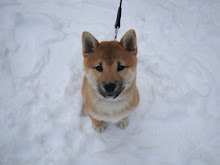
Yakushima Guide Association. I don't know why he's not on the staff page, but he said he goes on this trail 2 or 3 times in one week. It turned out that he spoke English and knew a lot about various plant species of the forest because he studied biological conservation in England! I really liked hearing him speak English, because I could hear a British accent mixed in with the Japanese accent. He tried to translate various plant and flower names for us; if he didn't know, sometimes I knew the translations but most of the time I relied on my dictionary in my phone. It also turned out that he has a Shiba! He unfortunately had no pictures to share as he had just gotten a new phone, but I shared many pictures of Mitsu with him. He was also the first person I came across in Japan who understood my academic situation: here I am hiking on a remote Japanese island during my summer break when I should be working on my dissertation. He said he studied specific species of bats and mountain lions in graduate school, so I gather he wrote some thesis abroad. I barely can write notes for my dissertation in English; I can't imagine writing anything of that magnitude in a foreign language. If, when, I return to Yakushima, I hope Maeda-san is still there, so he can guide me to the Shiratani-unsuikyo Ravine, that served as the specific source of inspiration for "Princess Mononoke," or the many other places that one can explore on Yakushima. I couldn't bring myself to ask how old he was or whether he was married or lived alone with his Shiba ("Coco," I think its name was), but I wondered what his life was like. While we all had bentos that our hotels prepared for us for lunch, he had three giant rice balls. Did he make them himself? That was a lot of rice.
On the way back from the Jomonsugi, we ate lunch in the rain and we took the same trail down, yielding to hikers still on their way up. I was starting to become the slowest hiker of the group, so I was instructed to walk behind Maeda-san, which would set the pace for the entire group. This is when I realized that we all had been playing Telephone with our feet. I'd copy Maeda-san's light and knowledgeable footwork, and Mordecai would do what I did. If I bastardized Maeda-san's footwork, it would get worse behind me. Once we got back to the railway tracks, we all took turns to be pace-setters, which also provided an opportunity for everyone to talk to Maeda-san. Otherwise, our walk back would have been dead silent and a bit of a Debbie Downer. It was clear we were all exhausted and ready to sit down in a vehicle. When we saw the rail tracks end, it seemed that Mitsutaka was most excited to return to our starting point. It really is tiring, so much that you don't know what to do with yourself. The next morning, Mai could not stand up, and I had to show her how to stretch her calves and hamstrings to be able to function properly, especially to get back to Tokyo!
Before Maeda-san dropped us off at the hotel, he took us to a bridge where we could see the Ambo River flow from the mountains on one side, and head towards the sea on the other side.
Mordecai had been remarking that despite all the rain and humidity in Yakushima, nothing smells stagnant. The mountainous region must help to keep the water constantly moving. What I noticed was that these trees look like broccoli. I also saw these like, super giant hydrangea plant-trees on the way up and down the Jomonsugi trail entrance. It must be easy to grow and maintain flowers and vegetables with all that heat, humidity and water.
 (Top row: flying fish sashimi at the hotel; tonkatsu in Kagoshima; me on a really old JAL plane back to Tokyo [those are earphones!]. Bottom row: Kagoshima raspberry, white peach, ramune macarons; Kagohshima's volcanic ash in the rain; shirokuma ice in Kagoshima [sorry for how it's cut off in the picture but I don't feel like fixing it]
On our way back to Tokyo, we went through Kagoshima again, getting tonkatsu (deep-fried breaded pork) for lunch. We also stopped at a mall where we all shared a giant "shirakuma" shaved ice dish the area is known for. It's shaved ice doused with condensed milk, and with random fruits stuck on the sides. I also picked up some macaroons--ramune, white peach, and raspberry flavored--thinking it couldn't be better than the Pierre Hermes ones I had in Shibuya and possibly the Laduree ones I had at Haneda Airport. I WAS WRONG! Kagoshima delivered hard. Those were some of the best macaroons I've had.
On the flight home, the time passed quickly. Mai slept while Mitsutaka, Mordecai and I devised a plan for them to come to Chicago and New York/Long Island later this year, even picking out dates (which I can't remember, lol). We parted ways at Haneda; hopefully the next time we see them is stateside.
In Conclusion
The trip was as epic as this post. Ordinarily, I'm not big on The Natures, but lately I've been getting interested with the dog, the garden, and now with Yakushima's entirely different environment. I'm also amazed that with the right attitude--mostly one of respect--The Natures can heal and energize. Unfortunately, I'm having difficulty thinking of an equivalent place in the U.S.--there's the Grand Canyon, the stuff up northwest like Yellowstone, and there are the Everglades in Florida, but nothing is really mountainous, humid, and rainy like Yakushima. Maybe on the Hawaiian islands? Ooh, I'll go there. I'd love to return to Yakushima. When I told people in Japan that we were going to Yakushima to see the Jomonsugi, they expressed envy. Our seniors, let's call them (e.g., Mai and Mitsutaka's mom, my grandma, my mother) were under the impression that only hikers and the youthful could go to Yakushima, but I read about plenty of other low-key things to do: bus tours to different sites, including watching sea turtles lay their eggs (or was it that the eggs hatch?). Mordecai joked about bringing back an ancient tree branch for Mitsu, and it would be crazy to ever bring Mitsu to any part of Japan, let alone a remote island (to meet Coco?!). But perhaps a human Mitsu or human Carleton would be lots of fun to bring along in the far future.